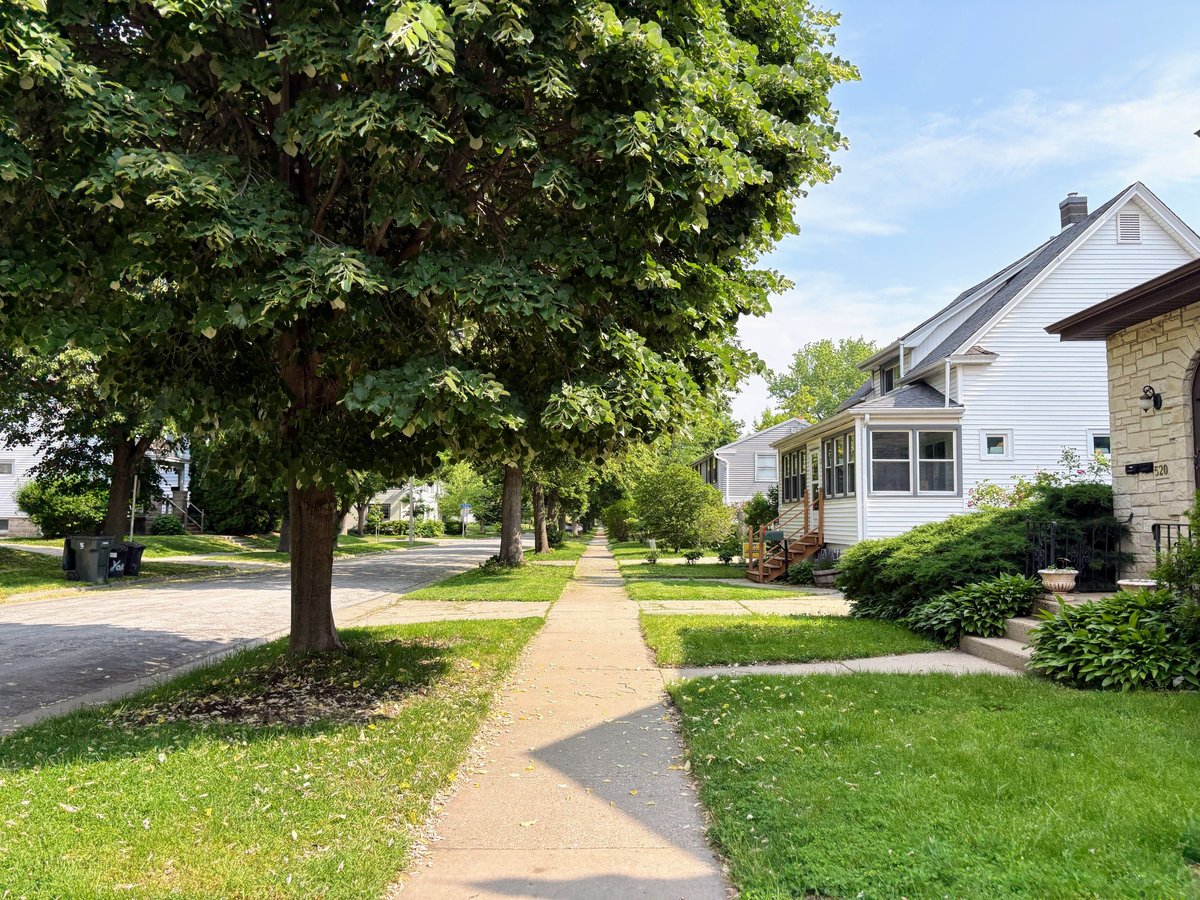
Tree-lined residential street with older detached houses and mature trees

Google Business Profile Marketing for Cedar Rapids Realtors Before the Kitchen, They Ask About the Water

The Cedar River runs through the middle of this city, and everyone who has lived here a while carries some memory of what it can do. So the questions a buyer asks are not the questions a listing sheet answers. How high is this lot above the river. What does the flood map say about this parcel. What has the house been through, and what has been done since. Those are answerable questions — they are just not answered by a description of the granite countertops. An agent who knows where the answers come from is worth more here than one who guesses.

275+ 5-Star Google Reviews

Cedar Rapids Market Snapshot

Status
The seat of Linn County, on the Cedar River
City Population
About 137,000
The River
Runs north to south through the city, splitting at May's Island downtown
The Question
Elevation, the flood map, and what the house has been through
Where Answers Live
FEMA flood maps and the City of Cedar Rapids
MLS
Cedar Rapids Area MLS
Why It Matters Here

Water Is the First Question, and It Deserves a Real Answer

Most places a buyer asks about the house first and the setting second. Here it runs the other way. The river is a fact of the city — it is why the city is where it is — and anyone who has been here through a spring has a working sense of what it can do. That makes water a question a buyer will ask, and a question a listing description frequently dodges.

Dodging it is a mistake, for a practical reason. The answers exist. FEMA publishes flood maps that show a zone for a given parcel. The City of Cedar Rapids publishes its own information about the flood control system, permits and local requirements. A buyer who is told where to look, and who is told honestly that the agent will not guess, trusts that agent more than one who offers a confident answer that turns out to be wrong.

So the useful thing an agent can do is not to have an opinion about a specific lot. It is to know the three or four questions that matter, know which office answers each one, and say plainly which questions are still open.

Book a Free 30-Min Call

What Buyers Actually Ask

Six questions that come up on a river-city house.

  • What does the current flood map say about this parcel?
  • How high is the lot relative to the river?
  • Has the property had water in it, and is that documented?
  • What is flood insurance likely to cost, and who should quote it?
  • Where are the furnace, water heater and electrical panel?
  • What work on the property required a city permit?
Inside the City of Cedar Rapids

Six City Neighborhoods, Each With Its Own Street Pattern

Each of these sits inside the city, and each has its own housing stock and its own street layout. Describe the neighborhood by its own name and a buyer recognizes where she is.

Czech Village

On the west bank of the Cedar River, southwest of downtown, centered on 16th Avenue SW. Older commercial buildings and houses close together on narrow streets, with the neighborhood's identity carried by its bakeries, shops and the museum on the riverfront. The housing stock is older and largely detached, on small lots.

Where it sits: west bank of the Cedar River, southwest of downtown, along 16th Avenue SW.

Search phrases: 'czech village cedar rapids homes,' 'czech village house'

New Bohemia

East of the river, just across from downtown, known locally as NewBo. A mix of older commercial buildings and residential blocks, with a market hall at the center and streets that have been reworked over the past two decades. Housing runs to older detached houses and converted upper-floor units.

Where it sits: east of the Cedar River, adjacent to downtown.

Search phrases: 'newbo cedar rapids home,' 'new bo district cedar rapids'

Kingston Village

On the west bank just across the river from downtown, one of the oldest parts of the city in street layout. Older detached houses on compact lots, mixed with later infill, and a walkable position between the river and the west-side commercial streets.

Where it sits: west bank of the Cedar River, across from downtown.

Search phrases: 'kingston village cedar rapids,' 'west bank cedar rapids homes'

Oakhill Jackson

South of downtown on the east side, with a housing stock that runs from late-1800s houses to early-1900s foursquares and bungalows. Wide streets, mature trees, and a mix of owner-occupied houses and rentals block to block.

Where it sits: south and southeast of downtown, on the east side of the river.

Search phrases: 'oakhill jackson cedar rapids,' 'historic homes cedar rapids southeast'

Wellington Heights

Southeast of downtown, largely developed in the early twentieth century. Mostly detached houses on small lots, with a density that comes from the street grid rather than from apartment buildings. Buyers here tend to be comparing house-by-house rather than neighborhood-to-neighborhood.

Where it sits: southeast of downtown, east of the river.

Search phrases: 'wellington heights cedar rapids homes,' 'southeast cedar rapids house'

Kenwood Park

Northeast of downtown, with a mix of early- and mid-twentieth-century houses on somewhat larger lots than the close-in neighborhoods. Streets are residential and quiet, and the housing stock includes bungalows, two-stories and later ranch houses.

Where it sits: northeast of downtown, in the city's northeast quadrant.

Search phrases: 'kenwood park cedar rapids,' 'northeast cedar rapids homes'
Two City Halls of Their Own

Marion and Hiawatha Are Their Own Cities

They sit in the same metro and share the same daily traffic, but neither is a Cedar Rapids neighborhood. Each is an incorporated city with its own government, its own city hall and its own boundary.

  • Marion

    East and northeast of Cedar Rapids, in Linn County, with its own city government.

  • Hiawatha

    North of Cedar Rapids, in Linn County, with its own city government.

Placing a House Here

Landmarks That Answer "Where Is It?"

Ask where something is in this city and the answer usually starts with the river. East side or west side comes before the street name, and the bridges are how people count their way across. A buyer builds the same map as she reads, so a description that places a house by the water and by the crossing she would take is easier to follow than one that places it by ZIP code.

A note on fields: landmark names belong in the description, where they help a reader picture a location. The service area field is where municipalities, counties and ZIP codes go, and it does not take a river or a theater. Keep the landmark in the copy and the city name in the field, and each stays useful.

Reading the River City

Four Things a Buyer Needs to Understand Before Making an Offer

1

The flood map is a public record, and the buyer can read it.

FEMA publishes maps that show a zone for a given parcel, and the City of Cedar Rapids publishes its own material on local requirements. A buyer who has looked at them will know more than a listing description that avoids the subject. Point her at the source.

2

Elevation is a fact about the lot, not the neighborhood.

Two houses on the same street can sit at different heights, and the difference matters more than the mailing address does. That is why the question belongs to the parcel, and why a general statement about an area is not an answer.

3

Flood insurance is a separate policy with its own price.

It is not part of a standard homeowner's policy, and what it costs depends on the property and the zone. An agent should not quote a number. A buyer should get one from an insurance professional before she removes a contingency.

4

Older houses carry their history in the mechanicals.

Furnaces, water heaters, electrical panels and ductwork are often where a river-city house shows what it has been through, because those are the things that get replaced after water. Ask what was replaced and when, and ask whether the work was permitted.

Writing About the River

How to Write About Water Without Guessing

1

Raise the subject before the buyer does

A short, calm paragraph that says the maps and the city are where the answers live does more than silence. Silence reads as though something is being avoided.

2

Never state a zone for a property

Not in a listing description, not in a post, not in a caption. It is a factual claim about a parcel, it can change, and it belongs to the public record rather than to your copy.

3

Name the sources

FEMA flood maps and the City of Cedar Rapids. Naming the office is more useful than offering an interpretation, and it is what a careful agent does anyway.

4

Describe the lot honestly

Grade, drainage, where the water goes on a heavy spring, whether there is a sump and where it discharges. Physical description is safe ground. Predictions are not.

5

Say where the mechanicals are

Furnace, water heater and electrical panel above or below grade. Buyers look for this, and it is a plain fact about the house.

6

Put the property's documented history in writing

If a seller discloses something, or if a permit shows work was done, it belongs in the conversation. What does not belong is an inference you made from a map on your own.

7

Photograph the things buyers ask about

The lot from the street, the grade at the foundation, the downspouts, the basement as it actually is. A clear photo answers more than a reassuring sentence.

8

Be willing to say you do not know

"Check the current map for this parcel" is a stronger sentence than a confident answer that turns out to be wrong. Buyers remember being told the truth.

A profile that meets the water question head-on reads as local knowledge rather than a sales pitch.

In thirty minutes we would go through your profile line by line and show you where a buyer's first question goes unanswered.

Cedar Rapids Questions

Six Questions Buyers Ask About a River-City House

Cedar Rapids, Iowa

The Water Question Is Coming Either Way

A buyer will ask it, and the only choice is whether your profile has an answer ready or leaves her to wonder why it does not. A calm, factual paragraph costs nothing and changes how the first phone call starts.